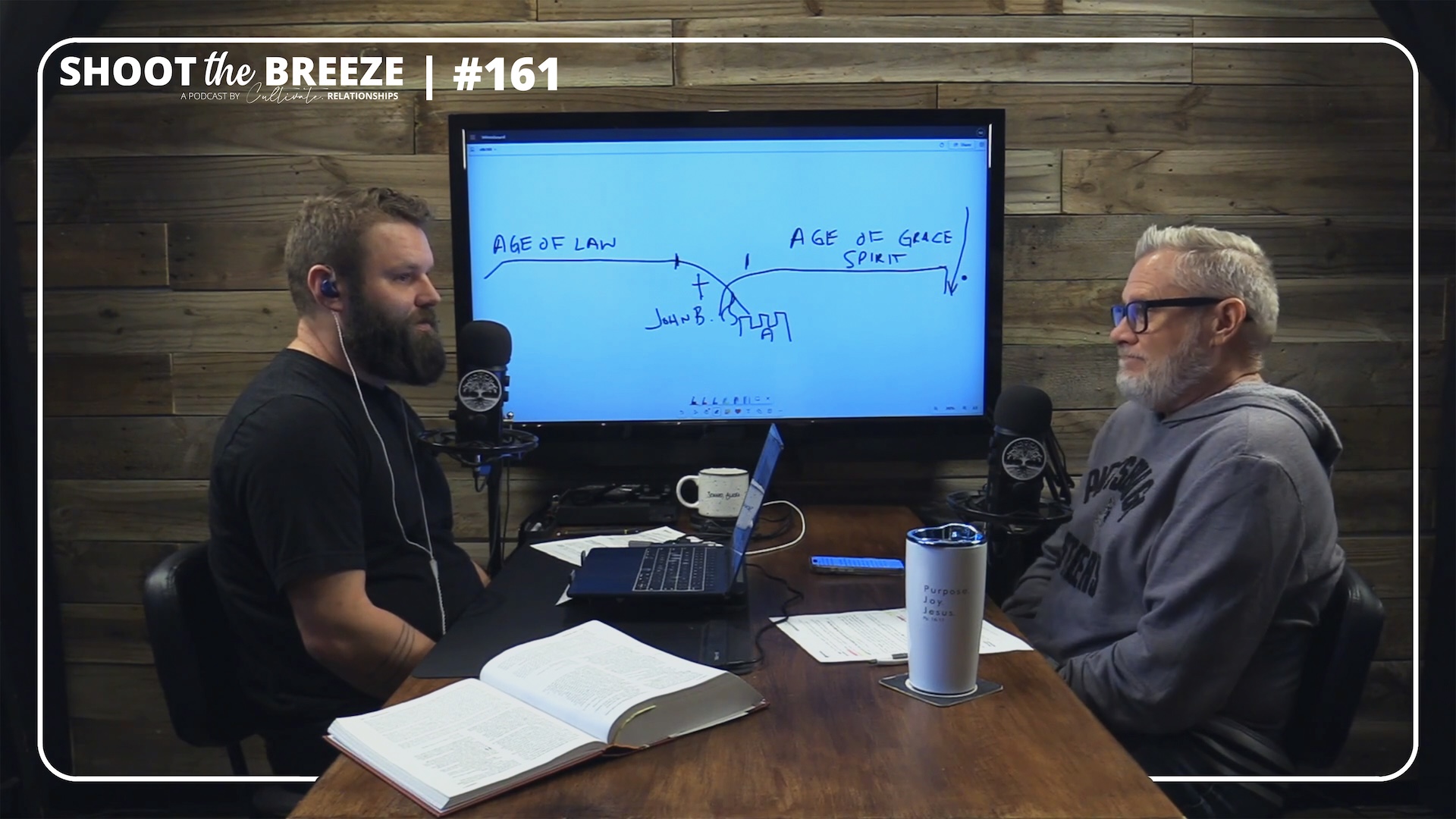
BIBLE SCHOOL EDITION – Nathan and Pastor Scott continue their study through Hebrews by confronting how easily believers drift back into external rules, self-effort, and spiritual performance. This episode presses into the heart of the gospel: Jesus didn’t partially replace the old covenant — he fulfilled and rendered it obsolete. The conversation exposes how law-based thinking (a life built on the 10 Commandments) still shapes worship, discipleship, and judgment today, and re-centers salvation as trusting Jesus’ finished work while living empowered by the Holy Spirit, not managed by religious systems. *Please note, this discussion takes place in two episodes. This is episode two.*
— EPISODE CHAPTERS —
(00:00) From Law to Life
The discussion moves from legalistic habits and outward performance to the freedom of trusting Jesus as mediator, exposing how both conservative and charismatic systems subtly replace reliance on the Spirit.
(21:47) One Sacrifice, Once for All
Hebrews 9–10 takes center stage as the conversation clarifies that Jesus’ death didn’t supplement the Law — it ended it. The old system pointed forward; the reality is now fully present in Christ.
(40:53) The End of the Age(s) Explained
Attention turns to “end of the age” language in the New Testament, distinguishing the end of the Law-centered age from the future physical return of Jesus, helping untangle common eschatology confusion.
(51:57) Activation Steps
This episode concludes with the activation step, inviting reflection on how external rules still shape faith and how to practice trust, rest, and obedience empowered by the Spirit.
— EPISODE LINKS —
• Playlist | Revelation
• Playlist | Galatians
• STB074 | BSE | Bible Oddities
— EPISODE NOTES —
Hebrews 1-8 Summary: The superiority of Jesus as man, angel, prophet, priest, and mediator of the old obsolete works-based covenant → (8-13) the superiority of the new faith & relationship-based covenant.
HEBREWS 8.13-9.14: The Religious Elements are a Parable of the Real
(see also Exodus 25.17-22; Jeremiah 31.31-34; Psalm 40.6-8; Wisdom of Solomon 9.8-10; John 1.14-18; Colossians 2.16-17; Hebrews 4.2; Revelation 4.1-11)
The tabernacle, priesthood, sacrifices, and mercy seat were never the ultimate reality—they were a parable. Parable = A relatable analogy that explains a deeper, more real spiritual truth about the Kingdom of Heaven. These religious elements pointed beyond themselves to a greater, truer mediation. They revealed humanity’s need for cleansing, access, and restored relationship, but they could not complete the work. Jesus fulfills what these symbols anticipated, addressing the conscience and heart rather than merely external behavior.
APPLICATION QUESTION(S):
Where do you still rely on external rules or self-effort to manage your relationship with God instead of trusting Jesus’ mediation? Or, how do you impose external rules on others to manage or define the health of their relationship with God?
HEBREWS 9.15-10.10: Jesus Made the Old Testament Law Obsolete
(see also Deuteronomy 18.15-19; Isaiah 53.10-12; Psalm 110.4; 4 Ezra 7.132-140; Matthew 5.17-18; Romans 8.1-4; Galatians 3.23-25; Revelation 5.9-10)
Jesus did not abolish the Law by rejecting it, but by fulfilling its purpose. The Law exposed sin, restrained evil, and pointed toward redemption, yet it could never transform the heart. Through his once-for-all offering, Jesus rendered the old system unnecessary by accomplishing what it could not: forgiveness, reconciliation, and internal renewal. Obedience is no longer driven by obligation to a checklist, but by relationship and trust empowered by the Holy Spirit.
APPLICATION QUESTION(S):
Where are you still living as if something needs to be added to what Jesus has already done? Or, checklists or expectations do you have of other Christians that would make them a “good” Christian or “reveal” that they have a healthy relationship with God?
HEBREWS 10.11-18: The Holy Spirit Leads in Freedom
(see also Deuteronomy 30.6; Ezekiel 36.26-27; Psalm 51.10-12; Sirach 17.1-14; John 16.7-11; Acts 2.17-18; Romans 8.1-11; 2 Corinthians 3.17-18; Revelation 22.17)
Because Jesus’ work is finished, the Holy Spirit now leads God’s people in freedom rather than fear. Forgiveness is complete, not fragile. The Spirit internalizes God’s Law — writing it on hearts rather than stone. This freedom is not license, but restored alignment with God’s design. The enemy’s accusations lose their power because there is no longer a debt to collect. Therefore, God’s people are invited to live confidently, relationally, and victoriously.
APPLICATION QUESTION(S):
According to Hebrews 10.18, there is no longer any need to offer a sacrifice for sin. What “sacrifices” do you still try to offer God when you sin? What “sacrifices” do you require from others when they sin against you?
ACTIVATION STEPS
From this study, prayerfully walk through the following steps:
LIVE FROM THE FINISHED MEDIATION
(Hebrews 10.18)
Because Jesus is the final mediator and the true mercy seat, we no longer relate to God through fear, ritual, or self-correction. We are invited to live from forgiveness, not for it.
Ask the Holy Spirit: Where am I still living as if something needs to be added to Jesus’ finished work? What would You have me do instead?