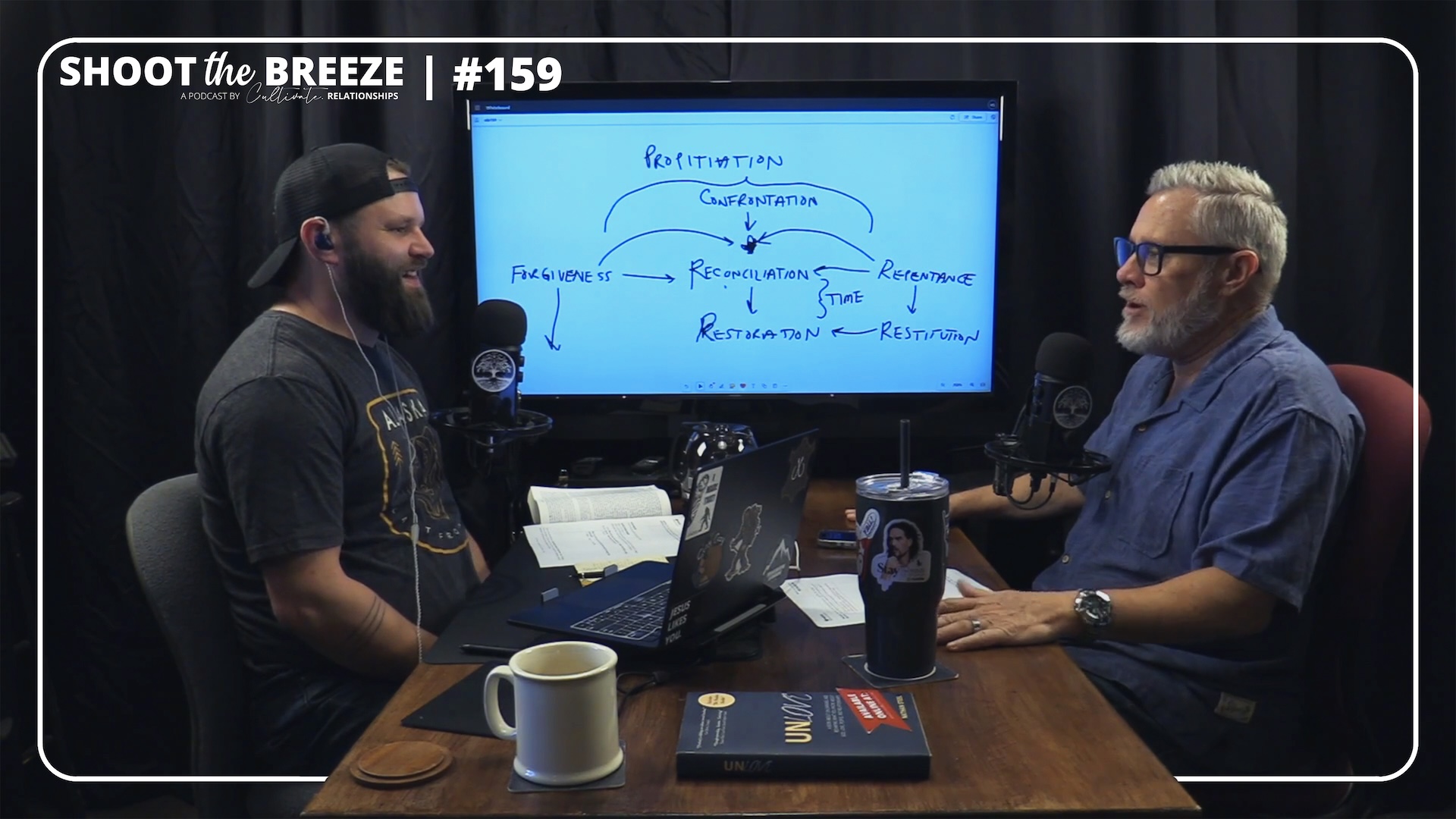
BIBLE SCHOOL EDITION – Nathan and Pastor Scott walk through the process of resolution by defining forgiveness, repentance, reconciliation, and restoration through the lens of Jesus and the gospel. They challenge behavior-based gospel narratives and show how the good news begins with who people are as God designed them, not what they’ve done. This episode reframes salvation, propitiation, reconciliation, and restoration as participation in God’s new creation, inviting Christians to live as ambassadors who reflect grace in real relationships.
— EPISODE CHAPTERS —
(00:00) Why Definitions Matter
The conversation opens by exposing how misunderstanding propitiation, forgiveness, repentance, reconciliation, and restoration can keep people stuck in brokenness, bitterness, and pain. Clear definitions remove fear, dismantle deception, and make it possible to begin the process of resolution.
(24:06) Identity v Behavior
Using 2 Corinthians 5, the discussion reframes the gospel as identity-first. People are not defined by sin or behavior, but by who God says they are — reshaping how we view repentance, forgiveness, and ultimately, evangelism.
(1:03:27) Ambassadors of Reconciliation
Attention turns to our role as participants in God’s work. Believers don’t repeat Jesus’ sacrifice, but they do carry His message — inviting others to repent, return, and live from their restored design.
(1:22:58) Activation Steps
This episode closes with reflection and application, inviting listeners to examine how they view people, release behavior-based judgments, and actively practice reconciliation as ambassadors of God’s new creation.
— EPISODE LINKS —
• Podcast Playlist | Forgiveness
• Podcast Playlist | Revelation
• The Freedom Booklet
• What is the Septuagint?
— EPISODE NOTES —
THE PROCESS OF RESOLUTION
2 Corinthians 5.11-21; Exodus 25.21-22; Hebrews 2.17; 9.5
In the Hebrew Scriptures, the Mercy Seat was where the blood was sprinkled as a symbol of repenter and forgiver coming together to be reconciled. In the New Testament, Jesus became our “Mercy Seat” — the propitiation for our sins.
Propitiation (The Mercy Seat)
Exodus 25.21-22 / Hebrews 2.17*; 9.5*
Initiated by either the offender or the offended, it is a mediating place or gift that brings together with the expressed intention of reconciliation.
(*Greek hilasterion, same in Septuagint for “mercy seat”.)
Confrontation
Matthew 18.21-35; Ephesians 4.16, 25-32
A mutually beneficial conversation meant to bring understanding and clarity to both parties regarding the root of the conflict, with the intended goal of seeking reconciliation, and to promote growth for both the offender and the offended.
Reconciliation
Matthew 5.23-24
The act of reuniting and establishing peace and harmony back into a relationship through means of forgiveness and repentance.
Forgiveness
John 20.23; Mark 11.26
The canceling of any actions or responses of a person by releasing to God any unmet expectations, needs, conditions, or desires.
Repentance
Matthew 5.21-26; Luke 5.32; 15.7
The act of rethinking a matter, causing a change of mindset or perception that results in building healthy habits and behaviors that are revealed and proven over time.
Restitution
Exodus 21.34; 22.3-15; Leviticus 5.16; 6.5; Numbers 5.7-8; Luke 19.1-10 (v.8)
The act of reasonably paying back what was taken or owed, or an intentional effort to right a wrong.
Restoration
Matthew 4.21; Galatians 6.1
The act of bringing back a relationship to a mutually beneficial and vulnerably healthy state.
This picture challenges us to ask: Are we willing to be a place of mediation for others? Do we offer forgiveness freely OR do we forgive only when the offender has repented OR do we forgive once and then close the door, cutting off opportunities for maturity, transformation, and reconciliation? This mediation isn’t just for those needing to forgive. If we have offended someone, are we willing to initiate that mediation through active repentance? Jesus models continual access to grace, and as Christians, we are to reflect the same thing.
ACTIVATION STEPS
From this study, prayerfully walk through the following steps:
RESTORE THE RELATIONSHIP
(Romans 12.18; Galatians 6.1-2)
Conflict is resolved through Spirit-led actions — not waiting for the other person to change. Healing begins when we take even just one small step toward peace and reconciliation.
Ask the Holy Spirit: Who is one person I have a conflict with — whether I hurt them, or they hurt me — that still needs to be resolved? What is my first step toward reconciling (and possibly restoring) this relationship?