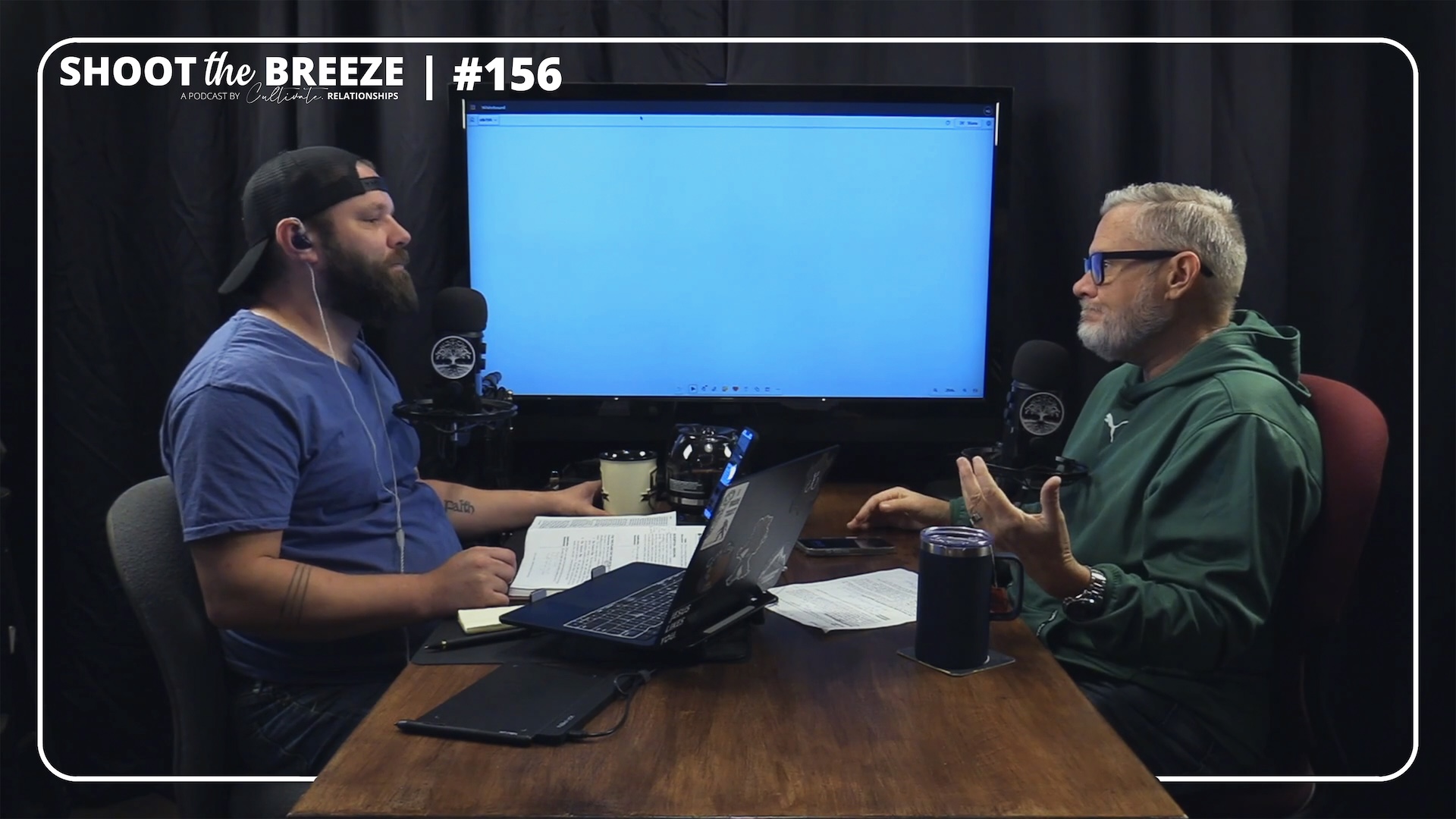
BIBLE SCHOOL EDITION – Nathan and Pastor Scott wrap up the Identity series by focusing on participation, clarifying how redemption invites us into active cooperation with what the Holy Spirit is rebuilding. After an opening conversation on humor, reverence, and knowing your audience, the study begins by confronting the idea that participation equals performance. Instead, obedience is framed as a response to grace, not an attempt to earn it. Drawing from Isaiah 61, this episode shows how true participation requires submission, stretches comfort, and forms maturity as we join God in His ongoing work of restoration.
— EPISODE CHAPTERS —
(00:00) Irreverent Humor, Reverence, and Knowing Your Audience
Before the study begins, the conversation wrestles with “irreverence”: being accused of it, pulling back in group threads, and sorting out when humor is healthy (and when it can unnecessarily offend).
(15:48) Participation Is Not Performance
The study begins by reframing participation in God’s work. Obedience is not earning, striving, or religious effort—it’s responding to what the Spirit is already rebuilding through redemption.
(41:45) Rebuilding Requires Submission
Using Isaiah 61, the discussion clarifies that restoration involves cooperation. Participation often stretches comfort, challenges control, and reveals where surrender—not self-direction—produces maturity.
(1:13:20) Activation Steps
This episode closes with an invitation to ask the Holy Spirit where participation has been confused with performance and where submission is needed to join what God is actively rebuilding.
— EPISODE LINKS —
• Podcast Playlist | Galatians Series
• Bookshelf | Identity Booklet
• STB107 | Grieving the Loss of a Child + Sarah P1
• Podcast Playlist | Forgiveness
— EPISODE NOTES —
REDEMPTION = REBUILDING
Isaiah 61.4; Matthew 5.14-16; 2 Corinthians 5.17-20
Redemption always leads toward reconciliation, restoration, freedom, and victory. It is the rebuilding of our lives — moving from living out of our past to living in our God-given destiny. Through faith in Jesus, we are reconciled to the Father, and by the Holy Spirit, we develop new, Spirit-led habits that replace our old destructive ones. This process often feels uncomfortable, which is why redemption happens best in community. As we allow the Spirit to rebuild our hearts and minds, He also uses us to help rebuild others, extending redemption outward to our families, friends, and those around us.
APPLICATION QUESTION(S):
When is it most difficult for you to participate in another person’s redemption process?
THE TWO PLANS THAT SHAPE OUR TRAJECTORY
Deuteronomy 30.1-20; Jeremiah 21.8; John 10.10
Our choice to trust Jesus is not a momentary decision but the trajectory of our lives. This rebuilding process is difficult — requiring Spirit-led transformation of attitudes, thoughts, and habits. Two plans shape this journey:
- The Father’s Plan – The Father is always toward good. Trusting His plan isn’t just about not sinning; it always leads toward something: from disconnection to reconciliation, rebellion to submission, defeat to victory, and captivity to freedom, etc.
- The Enemy’s Plan – The enemy always attacks identity, using people and circumstances to deceive us. His goal is always to steal, kill, and destroy our hearts, minds, lives, and souls — but he is powerless unless we agree with him..
APPLICATION QUESTION(S):
What is one example of how you have trusted the Father’s plan over the enemy’s plan? (Example: forgive, grace, mercy, say nothing, say something, pause, listen, etc.)?
REDEMPTIVE LIFESTYLES THAT REQUIRE PARTICIPATION
2 Corinthians 10.3-6; 2 Chronicles 20.20-21; Philippians 4.4-7; Matthew 6.9-15; 2 Corinthians 7.9-13
Redeeming our heart, mind, and life takes time, effort, and intentionality. The rebuilding process grows through three key lifestyles:
- Lifestyle of Surrender – Surrender weapons (excuses we use to justify the way we think or behave), surrender strongholds (physical or mental places we go to escape difficulty or uncomfortable circumstances), and surrender treasonous arguments (any belief, assumption, or hypothetical that disagrees with the Holy Spirit and His redemption).
- Lifestyle of Thankfulness – Giving thanks is an act of submission — it means we sacrifice our desires, will, and expectations — acknowledging God’s sovereignty and our faith and dependence upon both His good plan or His thorough redemption.
- Lifestyle of Forgiveness – Forgiveness releases “debts” (any need or desires that have gone unmet by others or the unfulfilled expectations of how we believe others are supposed to act and behave).
- Lifestyle of Repentance – Repentance takes ownership and proves our own change of mind and life over time. It is an action-based response to the conviction of the Holy Spirit that builds new habits and behaviors.
APPLICATION QUESTION(S):
Of these four lifestyles, which one do you sense the Holy Spirit is highlighting in your life?
ACTIVATION STEPS
From this study, prayerfully walk through the following steps:
LET THE HOLY SPIRIT REBUILD YOU
(Psalm 51.10)
Jesus’ wholistic and thorough redemption (rebuilding, renewal, and reconciliation) only takes place when we give the Holy Spirit access to every part of our heart, mind, and life.
Ask the Holy Spirit: What am I still trying to control instead of surrendering it to You? What fear or desire do I have that is keeping me from releasing that control? What step can I take tonight to trust You with what I’ve been holding onto?