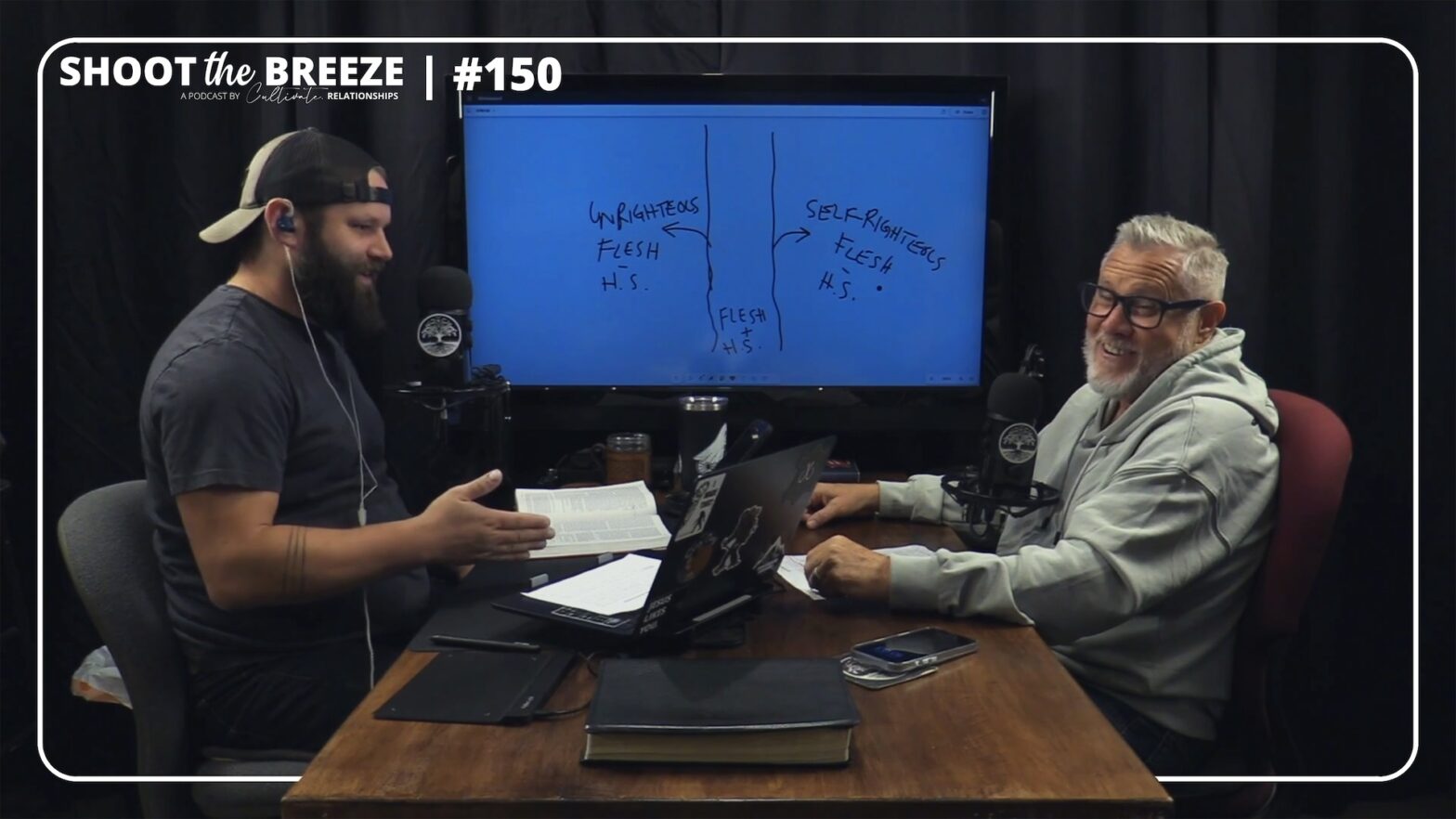
BIBLE SCHOOL EDITION – Nathan and Pastor Scott explore what salvation truly means, challenging traditional views of “the fall” and redefining it as humanity’s ongoing rebellion against God’s design. They unpack Luke 15 to show that every lost thing — a sheep, a coin, or a son — first belonged to its owner, revealing that redemption isn’t about earning God’s favor but returning to His heart. Together, they confront distorted teachings about salvation and highlight how reconciliation, repentance, and relationship with the Father are central to the gospel’s story.
— EPISODE CHAPTERS —
(00:00) Rethinking “The Fall”
The conversation begins by reframing Genesis 3 as the “Garden Rebellion,” exploring how humanity’s separation was relational, not spatial, and how God’s voice never left creation.
(14:36) The Lost and the Found
Through Luke 15, the parables of the lost sheep, coin, and son reveal that all began in belonging — the Father’s pursuit of those who are lost reveals His unending desire for reconciliation.
(33:43) The Father’s Love and Our Response
They examine the Luke 15 story, contrasting rebellion and unrighteousness with religion and self-righteousness while emphasizing the Father’s compassion toward both lost sons.
(59:52) Activation Steps
This episode closes with an invitation to ask the Holy Spirit to reveal where we’ve resisted relationship with the Father and to return — fully restored and reconciled to Him.
— EPISODE LINKS —
• Podcast Playlist | Romans
• Podcast Playlist | Galatians
— EPISODE NOTES —
PARABLES & THE KINGDOM OF HEAVEN
Luke 15 (esp. v11-32); Ezekiel 18 (esp. v20); Deuteronomy 30.1-20
Parables are simple relatable stories that communicate deep spiritual truths. They are analogies Jesus uses to reflect and illustrate truths about the Kingdom of Heaven. In Luke 15, all the “lost” objects belong to their owner — the sheep to the shepherd, the coin to the woman, and the sons to the father. Unfortunately, we have chosen to reject, rebel, or deny Him; becoming unrighteous or self-righteous. However, He has extended forgiveness toward every human — paying our debt because we have broken His design and purpose (His “Law”) — through Jesus’ death on the cross. His desire is to be reconciled to us, His children — but we must repent and accept His forgiveness for reconciliation to take place.
APPLICATION QUESTION(S):
Do you primarily view God as a good and loving Father who desires relationship with everyone — OR — a just and sovereign King who judges and punishes all who break His commands? Explain.
RIGHTEOUSNESS vs UNRIGHTEOUSNESS & SELF-RIGHTEOUSNESS
Romans 1.18-25; 8.1-8; James 4.4-8
The story of the sons and the dad in Luke 15.11-32 is all about how we break relationship with God. We reject right relational living (righteousness) with Him through unrighteousness (the rebellious son in the distant country) and self-righteousness (the religious son in the field). Unrighteousness is any attitude, action, or behavior that disagrees with God and His design for how we are to fulfill our God-given needs and desires. Self-Righteousness (similar to ungodliness) is simply our mistrust or distrust of God — our unwillingness to acknowledge, seek after, trust, and thank Him in every relationship or circumstance. The paradox about unrighteousness and self-righteousness is that we inevitably become both — we trust ourselves and reject, rebel, or deny Him and create our own “laws” for ourselves and others to live by.
APPLICATION QUESTION(S):
What “distant country” (unrighteousness) or “field” (self-righteousness) do you tend to go to physically, mentally, or emotionally to escape the discomforts, troubles, or pains of life? Why? In what relationships or circumstances is it easier or “natural” for you to go to this “distant country” or “field”?
ACTIVATION STEPS
From this study, prayerfully walk through the following steps:
STEP #1 – SEE THE FATHER CLEARLY (Luke 15.20)
God is both a loving Father and a just King. Our view of Him shapes how we respond to Him — whether we run toward Him or hid from Him.
Ask the Holy Spirit: How do I interact with God — as a loving Father or as a strict judge? How is my view shaping my relationship with Him?
STEP #2 – IDENTIFY YOUR “DISTANT COUNTRY” OR “FIELD” (James 4.8)
Like the two sons, we all wander — either through rebellious rejection or self-reliant responsibility. Recognizing where we tend to escape or control is the first step toward repentance and reconciliation.
Ask the Holy Spirit: Where do I run (physically, mentally, or emotionally) when I feel discomfort, trouble, or pain? What does this reveal about how I trust You?
STEP #3 – RETURN TO THE FATHER’S HOUSE (Deuteronomy 30.19):
Repentance isn’t just about turning from sin (unrighteousness or self-righteousness) but turning toward the Father to be restored as His child.
Ask the Holy Spirit: Instead of running to my “distant country” or “field” when I feel discomfort, trouble, or pain, what would it look like to run into Your house instead?