
A clever trick I was taught in ministry school was to invite someone to walk with me if they had something to discuss.
You see, my training school was located in a large church with endless hallways, and it was extremely common to need to move from one end of the campus to the other in the course of the day. All the students and leadership of the school were given endless tasks and responsibilities. The work was never done.
To save time, I would walk really fast, with purpose, from point A to point B.
If someone was in the middle of a meeting with me and I had to go, I would just tell them, “Walk with me.” Or if they needed to speak to me but I was completely booked, I could offer them the walking time that I had.
If you were the individual with lesser standing, your conversation would end whenever the more important person got to their destination. The more “important” you were, the more willing someone was to walk with you toward a destination you were not necessarily trying to reach.
When I think about it now, quickly walking with someone who desires my attention, or quickly following someone to their next appointment when I am the one in need of attention, is not a good example of the Father’s heart. Yet this was the model I was taught, and I lived out of this mentality for decades.
The philosophy behind this mindset was simple: “God-given” agendas and goals were the main objective. Connecting with people was important, but often because it helped us accomplish those goals. Even our own pain needed to be dealt with efficiently so we could get back to the work God had given us.
I’m sure many of you are already mentally poking holes in this philosophy.

I discovered the hard way: People are always the goal.
I had spent years treating people as secondary to the work of God. Somewhere along the way, I had also begun to believe that God saw me the same way.
Over fifteen years ago, I got sick.
It was subtle at first. I was tired after sleeping all night. Slowly, I had less stamina to accomplish all my plans and goals.
I honestly used to power-walk ahead when I was with my husband and yell back to him, “Walk with purpose! I have somewhere to be!” Now I drag slowly behind him, gently reminding him that I don’t have the stamina I used to.
My goals and agendas have been reduced to one small light located directly in front of my feet. “Where should I go, Lord?” I ask. “I don’t have the ability to make it very far.”
The other day, I was in a place of pain and lamenting to the Lord. He told me to read Psalm 23. At first, I questioned it with a mental eye roll, “Psalm 23, Lord? How basic. I already know that one.”
But I begrudgingly flipped to it.
Psalms 23:1–6 (NLT)
A Psalm of David
“The Lord is my shepherd; I have all that I need. He lets me rest in green meadows; he leads me beside peaceful streams. He renews my strength. He guides me along right paths, bringing honor to his name. Even when I walk through the darkest valley, I will not be afraid, for you are close beside me. Your rod and your staff protect and comfort me. You prepare a feast for me in the presence of my enemies. You honor me by anointing my head with oil. My cup overflows with blessings. Surely your goodness and unfailing love will pursue me all the days of my life, and I will live in the house of the Lord forever.”

As I read the familiar passage, one question began to form in my mind: What is this walk?
This passage is filled with journey and movement. It describes the way we walk through life. But in David’s description, we are led by a Shepherd whose attention and care are on us. He isn’t simply traveling toward some important destination while begrudgingly dragging us along. He comforts, guides, protects, provides, and stays close. He leads through peaceful places and frightening ones. He is always aware of where His sheep are and what they need. This Shepherd is worthy of our trust.
As I thought about this passage, I began to think about David. He knew this subject in a way most of us do not. He had been the shepherd, and now he was writing from the perspective of the sheep.
He knew what a shepherd felt toward his sheep: The responsibility. The leadership. The protection. The care.
David understood the heart of a good shepherd, and he comforted himself with that lived knowledge.
Does David’s picture of the Heavenly Father align with your view of Him and the expectations you believe He has of you?
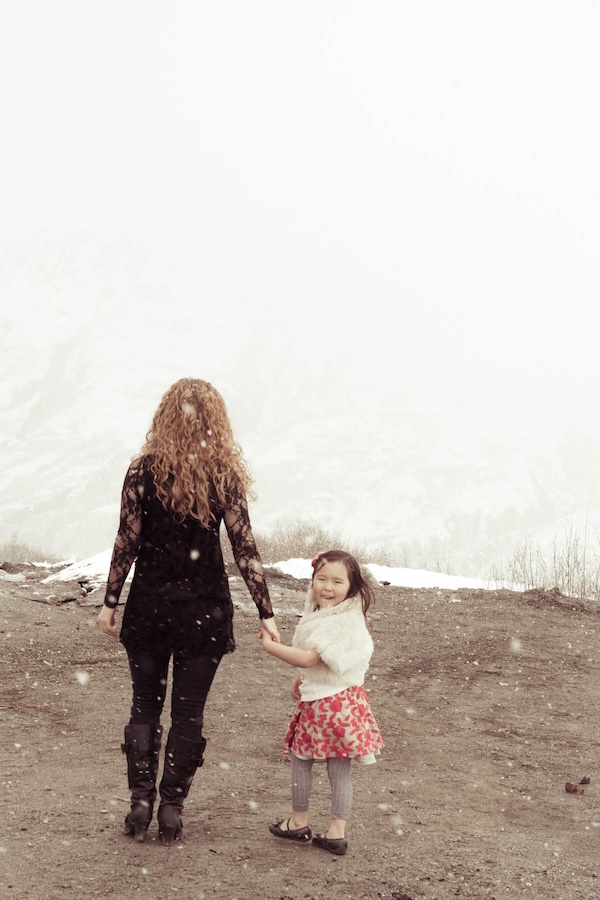
As I think about this passage, the phrase “walk with me” takes on a different feeling altogether. Nowadays, I don’t really have anywhere to go. No agenda. No big goals. In fact, my walk has slowed down to the point that I barely feel like I’m moving. Yet I still hear Jesus say, “Would you like to walk with Me?”
Not because we have somewhere to be. Not because there is something we need to accomplish. He has already done all of that.
He asks me because He is interested in spending time with me. He asks because He knows I need to be heard. To be seen. And, at certain points along the way, to be carried.
The destination has become so much less important to me than the walk itself. Maybe that is what I misunderstood all those years ago. I thought walking with God meant He was taking me somewhere. That there was a destination, an assignment, a purpose I needed to reach. And certainly, there are places He leads us and things He asks us to do. But maybe the greatest invitation was never simply, “Go there.”
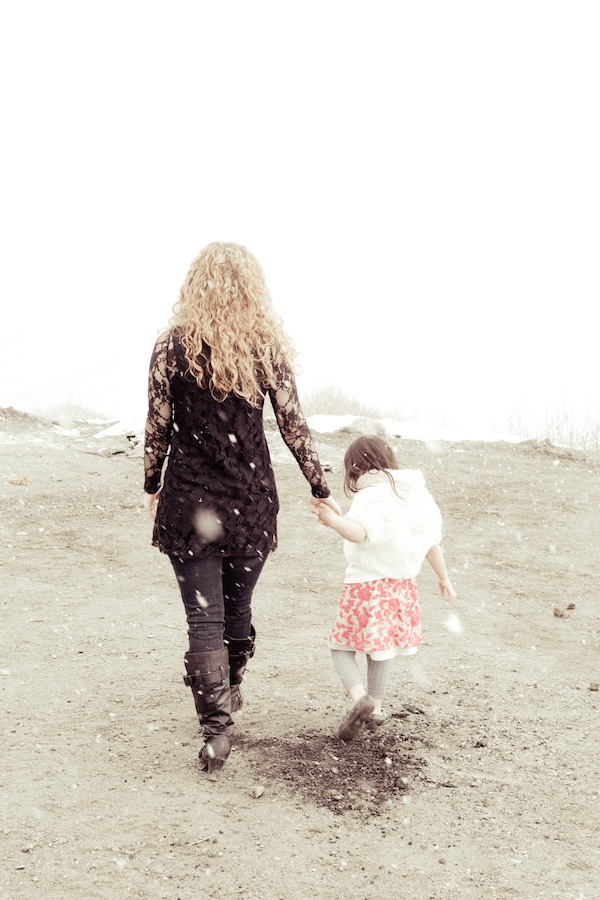
Maybe it has always been: “Walk with Me.” Not faster. Not more efficiently. Not because He needs something from you when you arrive. Simply because He wants you near. And if you are tired, He will slow down. If you are hurting, He will tend to you. If you are afraid, He will walk with you through the valley. And if you cannot walk anymore, I believe the Shepherd knows how to carry His sheep.
The destination was never more important than the person walking beside Him.
With love and hope,
Lacey
CLICK TO SUBSCRIBE