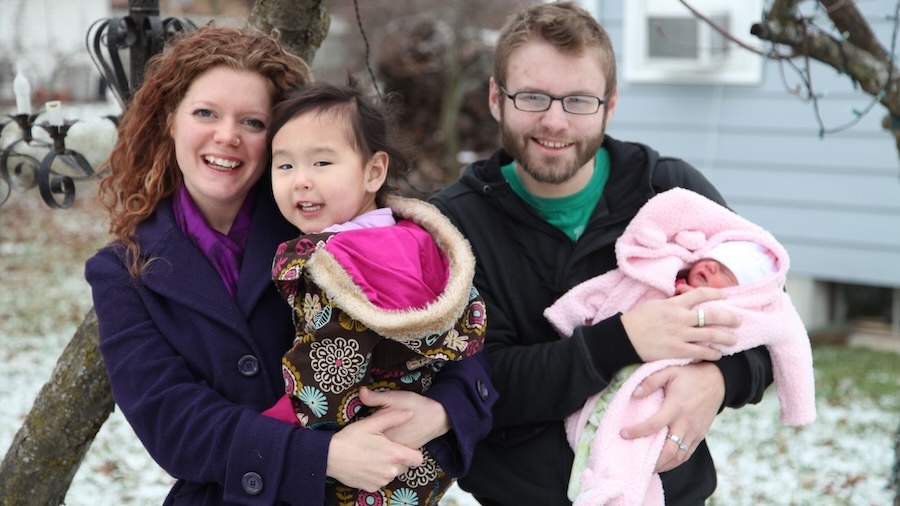
Pregnancy has always fascinated me. It’s truly one of those things that we normalize because of how common it is. But nevertheless, it is a miracle.
Two people, a flash of light, and a separate soul is brought into existence. Two become three.
A woman becomes more than just herself. She becomes a mother and a life source to a separate soul that is found literally within her own body.
It is majestic and powerful, and it’s about as common as having pizza on Friday nights.
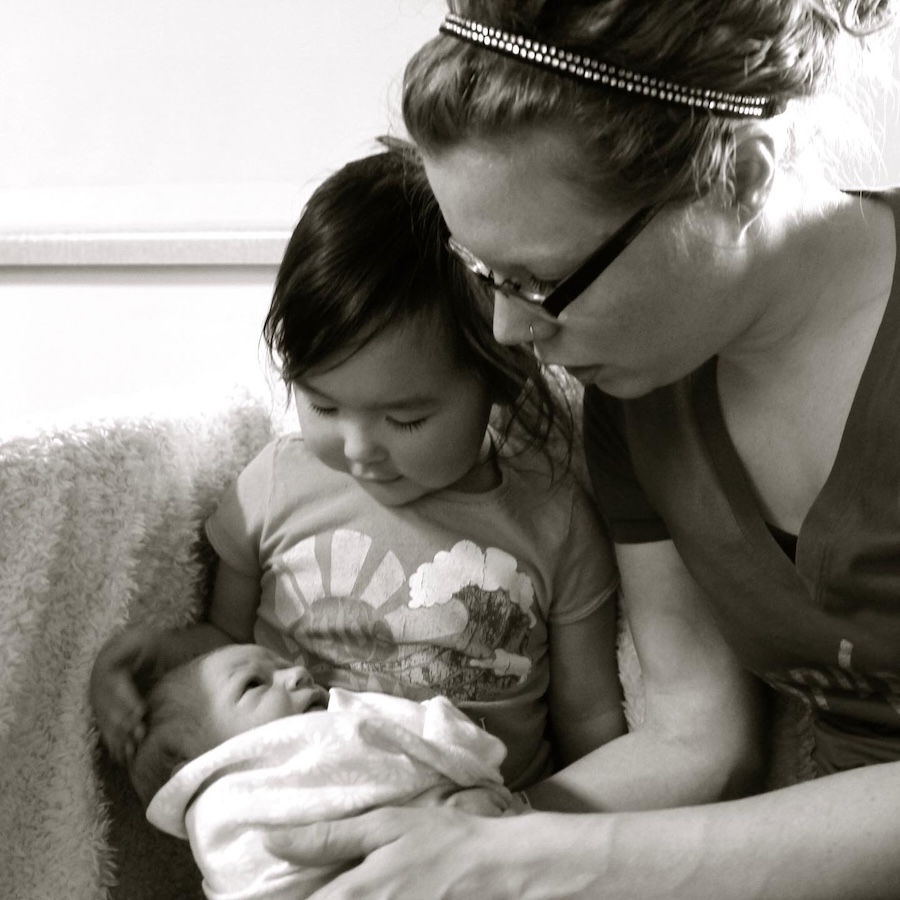
I think one of the reasons I have personally never taken it for granted is because it has always been out of reach for me.
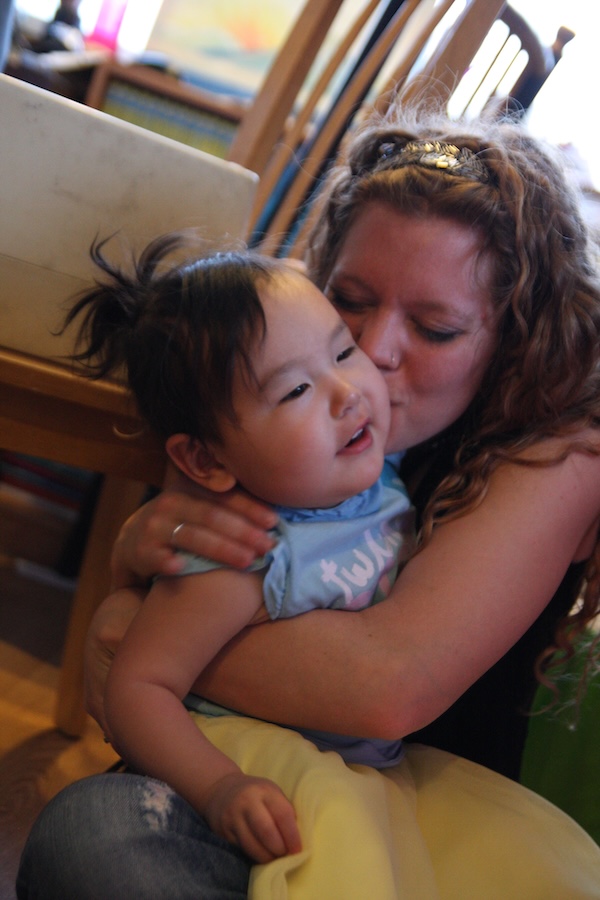
I have the honor and privilege of calling myself a mother only because of loss and pain.
My journey into motherhood could only take place because of another woman’s brokeness and heartache.
I have had the joy of watching my children grow and mature, and I have also had the agony of watching them reconcile with this unimaginable loss.
I know. I know. We don’t like this. Our minds rush to spiritually bypass the pain of adoption in order to sing its praises. Why mourn when we can rejoice in redemption? Why tarry in pain when we can see how the Lord can heal?
Although there is a place and a time for that perspective, it does not remove the need to grieve what was lost.
We do not need to overlook the emotional, physical, and spiritual cost of what was lost in order to still value what was gained. We have a deep need to grieve just as much as we have a need to rejoice. One cannot, and should not, cancel out the other.
Scripture addresses these human needs and even describes them in terms of time: “There is a time to weep and a time to laugh. A time to mourn and a time to dance.” (Ecclesiastes 3:4)
There is a time for us to feel and acknowledge the truth of every season. Denying what we feel cannot heal our broken places. It is only when we look at our brokenness and our pain full in the face, meeting it eye to eye, that we are able to see it fully. To feel out its edges and sharp places and grasp it firmly in our hands. It is only when it becomes a thing we can bear to look at that we can acknowledge its weight and our inability to carry it.
When we do not acknowledge our pain, we become reckless in our treatment of it. We deny its existence while still trying to create a healthy life under the weight of it.
Unfortunately, refusing to name pain does not reduce its weight. It does not relieve the pressure or make it easier to carry. Our refusal to face it only causes us to become obsessed with relief.
How can we ease this pressure without having to acknowledge its form?
There are no methods of coping this way that come without a cost.
Numbing is one way.
Substances, moving fast, or selfish pleasures can become methods of relief.
Anything to avoid feeling the full weight of the pain.
Another way we can manage the weight is by creating an identity around our ability to carry it.
“Doesn’t this weight look heavy? Aren’t I so strong and capable to carry it on my own? I’m better and stronger than you because I carry this weight without much care. I was made to carry this weight!”
We can proclaim this proudly.
Yet we weren’t.
We were born into a world where we are destined to encounter burdens. None of us leaves the protection of our mother’s womb and continues through life untouched by pain.
The weight of pain is inevitable, and no one is immune to it.
We all go through life eventually becoming acquainted with pain.
Yet Jesus offers another option: “Come to Me, all who are weary and heavy-laden, and I will give you rest. Take My yoke upon you and learn from Me, for I am gentle and humble in heart, and you will find rest for your souls. For My yoke is easy and My burden is light.” (Jesus in Matthew 11:28–30 NASB1995)
But here is the hard part: the reality is that we would rather close our eyes tightly, like a child trying to hide when there is nowhere to go.
We must acknowledge our pain and hold its fullness long enough to hand it over to Jesus. There is no way to hand something to someone while denying that we are holding it.
So name your pain.
Grieve it.
Feel its weight.
And see it for what it is.
I have learned through adoption that redemption does not erase what came before it.
The beauty of redemption is revealed more fully when we are willing to acknowledge the whole story, including the pain that made redemption necessary.
So name what hurt.
Allow yourself to grieve what was lost.
Hold it long enough to acknowledge its weight, and then place it into the hands of the One who is strong enough to carry it.
You don’t have to pretend it didn’t hurt in order to believe that He can redeem it.
Redemption does not require denial.
With love and hope,
Lacey
CLICK TO SUBSCRIBE